Bijnor Viral Hotel MMS: 200 Private Videos of Couples Found on Restaurant Worker’s Phone
What Happened in the Bijnor Restaurant Case A reported privacy-violation case from Bijnor, Uttar Pradesh, attracted widespread attention after police began investigating allegations that couples using a private cabin at a local restaurant had been secretly recorded. Initial repor...
By Umesh Yadav · Published
What Happened in the Bijnor Restaurant Case
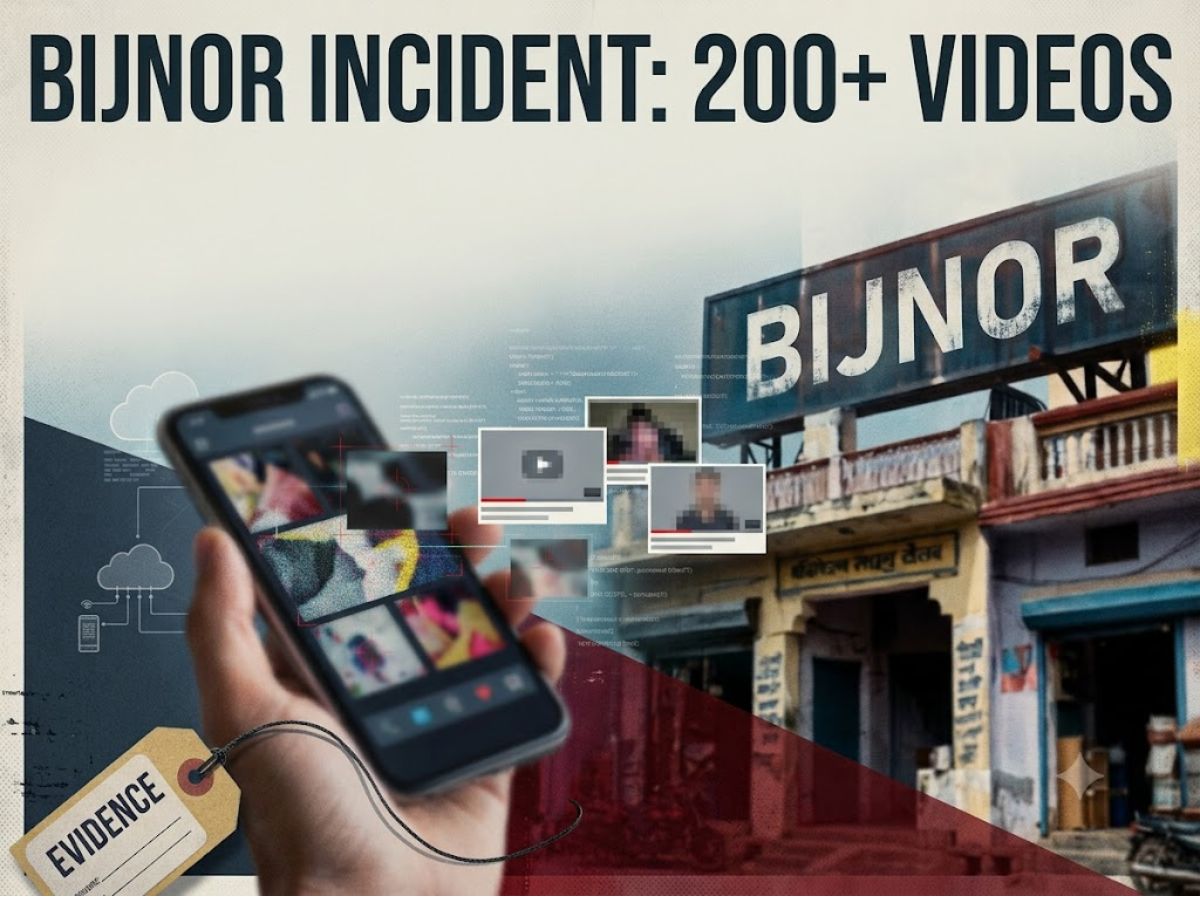
A reported privacy-violation case from Bijnor, Uttar Pradesh, attracted widespread attention after police began investigating allegations that couples using a private cabin at a local restaurant had been secretly recorded. Initial reports published in February 2026 said that a restaurant employee’s phone contained more than 200 recordings involving couples and students, after a couple reportedly became suspicious about the employee’s behavior. The reports said the restaurant, identified as Center Point Fast Food and Restaurant, had a secluded cabin where customers were offered privacy, while the alleged recording was carried out without their knowledge.
The case is often described online using terms such as “Bijnor viral hotel MMS”, “private video leak,” or “restaurant MMS case.” Those phrases can be misleading, however, because a verified report that private recordings exist is not the same thing as proof that all of the recordings were publicly uploaded or became widely available online. News reports described an alleged discovery of private footage and a police investigation into how it was recorded and whether it was used for blackmail or circulated. That distinction matters because the people shown in such recordings are potential victims of a privacy crime, not public figures whose personal lives are open for public consumption.
The incident therefore has two very different sides. One is the criminal investigation involving the restaurant employee and possibly others. The other is a serious digital-safety issue involving private individuals whose intimate images may have been captured without consent. A responsible report should concentrate on the verified investigation, police action, and legal issues rather than identifying victims, describing intimate acts, publishing screenshots, or directing readers toward the alleged footage. That approach is also important for search publishers because repeating or facilitating the circulation of intimate material can deepen the harm caused by the original alleged offence.
How the Private-Video Case Came to Light
According to reporting published after the incident, the matter surfaced when a couple visiting the restaurant became suspicious while using the private space. The reports say that on February 4, 2026, the couple questioned the behavior of an employee and, with the involvement of another person, checked his phone. They reportedly found a large number of private recordings involving other visitors. A confrontation followed, and police were contacted. The employee allegedly left the premises with the phone, according to several reports covering the first days of the investigation.
The details vary slightly among reports because the investigation was still developing when most of the coverage appeared. Some reports described the trigger as suspicion about a mobile phone being used from outside the cabin, while others focused on a private recording setup associated with the cabin. What remains consistent across multiple news reports is the central allegation: customers believed they were using a secluded space, but investigators received allegations that their private moments were being recorded without consent. Police then began collecting electronic evidence and examining the restaurant premises.
That sequence is significant because the discovery reportedly did not begin with a social-media post or a public leak. It began with suspicion at the location itself. This is an important distinction for readers searching for “Bijnor MMS video” or similar terms: the reporting available from established news outlets describes an alleged recording and investigation, but it does not provide a verified public archive of legitimate footage that readers should access. The underlying issue is the alleged unauthorized recording, not the content of any intimate material.
A Couple Reportedly Became Suspicious
Reports indicate that the couple using the private cabin noticed something unusual and suspected that their privacy might be compromised. Their concern reportedly led to a confrontation with the employee. After the employee’s phone was checked, a large collection of recordings was allegedly discovered. Police were subsequently informed, and the incident became the subject of a formal investigation.
The exact circumstances surrounding the confrontation are described differently in different publications, so details should be treated as reported allegations rather than established facts. What is important is that the alleged discovery prompted police involvement and led investigators to examine both the phone-related evidence and the restaurant premises. Reports also say the authorities took control of the restaurant’s CCTV/DVR equipment as part of the evidence-gathering process.
What Was Reportedly Found on the Phone
The most repeated figure in early reports was more than 200 private videos. Aaj Tak reported that more than 200 couples’ intimate recordings were found on the employee’s phone, while Times of India and LatestLY also described roughly 200 recordings involving couples or students. Later reporting by Navbharat Times said investigators found around 300 private videos and photographs, showing that the number cited in news reports changed as additional evidence was discussed.
That difference does not necessarily mean that one publication was deliberately misleading readers. In an ongoing digital-evidence investigation, the number of files can change as investigators examine phones, storage devices, photographs, duplicate files, or related evidence. For that reason, the safest wording is “more than 200 recordings were initially reported, while a later report cited around 300 videos and photos.” The article should not turn one disputed or evolving number into an exact final count unless investigators officially publish it.
Why Reports Mention 200 Videos and Later 300 Files
The changing figure is one of the most interesting factual points in the Bijnor case. Early coverage from February 7–12 generally used the figure 200 or 200-plus when describing the content reportedly found on the employee’s phone. Later coverage on February 14 from Navbharat Times reported approximately 300 private videos and photos. Because these figures come from news reports at different stages of reporting, they should not automatically be treated as contradictory final evidence.
Also read: Will Levis and Gia Duddy Leak Video Viral On Social Media
There is another reason to be careful with the phrase “200 private videos of couples.” Some headlines use that formulation because it is concise and searchable, but later descriptions mention both videos and photographs. That means the number may refer to a broader group of files rather than exactly 200 unique videos featuring 200 different couples. Readers should therefore avoid assuming that every file represents a separate person or couple. Only an official forensic inventory could establish the exact number, format, duplication status, and identities represented in the seized material.
For an SEO article, factual wording is much safer than an exaggerated headline. The underlying verified story is strong enough without turning uncertain figures into absolute claims. A suitable description is: “Police investigated allegations that a Bijnor restaurant employee secretly recorded private moments of customers, with news reports initially saying more than 200 recordings were found and a later report citing around 300 videos and photos.” That wording reflects what the available reporting actually says and avoids pretending that an exact final forensic count has been publicly established.
What Is Known About the Restaurant’s Private Cabin
Several reports said that the restaurant had a secluded area described as a private cabin or VIP room where couples could sit separately from the main dining area. The cabin was reportedly located beneath or near a staircase and was presented to customers as a more private place. Some coverage said customers paid an additional amount for the space, with reports giving figures between roughly ₹1,000 and ₹2,000 depending on the article.
The private cabin is central to the case because the alleged recording was reportedly designed around the customers’ expectation that the space was secluded. A person choosing such an area would reasonably expect that other customers and staff would not secretly record them. The alleged abuse of that expectation is what transforms the story from an ordinary dispute about restaurant facilities into a serious privacy and criminal-law issue. Reports said police inspected the premises and also secured the restaurant’s DVR equipment for technical examination.
The Alleged Recording Method
News coverage differed in how it described the alleged method. Some reports said an employee used a small hole or opening near the cabin to record customers from outside with a mobile phone. Other reports initially discussed the possibility of hidden-camera equipment, while later reporting said investigators had not found a conventional spy camera during the initial inspection and instead seized the DVR for examination.
That distinction is still important because a sensational headline can quickly turn an allegation into a supposedly established technical fact. At the stage described in the available reports, investigators were examining how the alleged recordings were made and stored. Readers should therefore be cautious with claims about a sophisticated hidden-camera network unless police or a court later confirms those details. The confirmed public-interest point is that the authorities treated the allegations seriously enough to register a case, inspect the premises, and collect electronic evidence.
Police Action After the Complaint
Following the complaint, police reportedly reached the restaurant, examined the allegations, and began collecting evidence. Reports identified City Circle Officer Sangram Singh as a police official who commented on the investigation. The restaurant was later reported to have been sealed, and police teams were said to be looking for the employee identified in reports as Satendra Kumar, who was described as having gone missing or absconded after the confrontation.
News reports also stated that police took the restaurant’s CCTV DVR into custody for technical examination. This step matters because digital investigations often require more than simply looking at a phone. Investigators may need to establish when files were created, whether they were copied, whether other devices were involved, whether footage was transferred, and whether recordings were circulated. Those are forensic questions, and conclusions about them should come from investigators rather than from social-media speculation.
A later Navbharat Times report said police were also considering action related to the restaurant’s licence and had sent a report to the SDM. It further reported that investigators were trying to contact people whose images may have appeared in the material.
The FIR and Voyeurism Allegation
Multiple reports said an FIR was registered in connection with the allegations and that Section 77 of the Bharatiya Nyaya Sanhita (BNS) was invoked in the case. Section 77 concerns voyeurism, including capturing or disseminating images of a woman engaged in a private act in circumstances where she would ordinarily expect privacy. The statutory provision also addresses dissemination where a person may have consented to the original capture but did not consent to sharing it with others.
According to the text of Section 77, a first conviction can carry imprisonment of one to three years and a fine, while a second or subsequent conviction can carry three to seven years and a fine, subject to the legal requirements of the provision and the facts established in court.
Also read: Viral Controversy: Gaurav Khanna’s YouTube Channel Deleted After Bigg Boss 19 Victory
It is important to distinguish an FIR from a conviction. An FIR records allegations that police are investigating; it does not establish guilt. Likewise, media reports about an accused person should not be treated as a judicial finding. The final legal outcome depends on the investigation, evidence, prosecution and court process.
Restaurant Sealed and Digital Evidence Examined
The reported sealing of the restaurant was one of the significant administrative developments in the case. Hindustan reported that police shut the establishment after examining allegations involving private photographs and videos, while Times of India also reported that the restaurant had been sealed during the investigation.
The handling of digital evidence is equally important. A mobile phone containing alleged recordings can potentially provide metadata, file histories, application information, storage locations and connections to other devices or accounts. A CCTV DVR can also help investigators reconstruct movements inside the premises. Those technical questions cannot be reliably answered by reading a viral post or watching a screenshot circulated on messaging apps.
Some reports also raised questions about whether anyone beyond the identified employee knew about or participated in the alleged recording. Police said they would investigate any additional involvement established by evidence. That is why claims that a whole restaurant management team, a wider online group, or a larger “racket” was definitively responsible should not be presented as proven unless investigators or a court establish those facts.
Was the Footage Actually “Viral” Online?
This is where the wording of many online headlines becomes especially important. The phrase “Bijnor viral MMS” strongly suggests that the private videos themselves were publicly available and widely circulating. The available news reports establish that private recordings were allegedly found and that police were concerned about possible misuse or circulation, but they do not establish that every video became publicly viral or that a legitimate, verified collection of the recordings is available online.
There is a major difference between an incident becoming viral as a news story and an intimate video becoming publicly distributed. The first means people are discussing the case. The second would mean private material has been disseminated without the consent of the people depicted. Confusing those two things can cause additional harm to victims and can encourage people to search for or forward the material.
For that reason, readers should treat social-media posts claiming to show “the original Bijnor hotel MMS” with extreme caution. They could contain unrelated videos, fabricated claims, edited material, or actual non-consensual imagery from unknown sources. Sharing such content can multiply the damage and potentially expose the sender to legal consequences.
Alleged Blackmail Claims in the Case
Some reports said that the recordings may have been connected to blackmail attempts. Hindustan reported that the case came into the open after an allegation involving a private video being sent to a young man along with a demand for money. Navbharat Times also reported an allegation that private material had been used to threaten someone for payment. These accounts should be understood as allegations being investigated rather than as facts established by a final court judgment.
Blackmail involving intimate material can be particularly damaging because victims may fear exposure to friends, family, classmates, employers or the wider public. That fear can make people reluctant to approach police or seek technical help. It can also allow an offender to continue demanding money even after the first payment. A person targeted in this way should preserve evidence, avoid negotiating alone, and seek assistance from law enforcement or appropriate cybercrime channels.
The central public-interest issue is therefore not the intimate content itself. It is the alleged non-consensual capture, possession, threatened use or dissemination of private material. Reporting on those elements keeps attention on the alleged wrongdoing and reduces the risk of turning victims into subjects of internet curiosity.
Why Non-Consensual Private Recording Is a Serious Crime
A private conversation, photograph, video or intimate moment does not become public property simply because it exists on a phone. Consent is central. A person may agree to appear on camera in one context but not agree to an unknown employee recording them, storing the recording, sending it to another person,
Topics: Viral
About Umesh Yadav
Avery leads editorial standards and oversees every story we publish. Previously ran entertainment desks at two national publications.
Comments